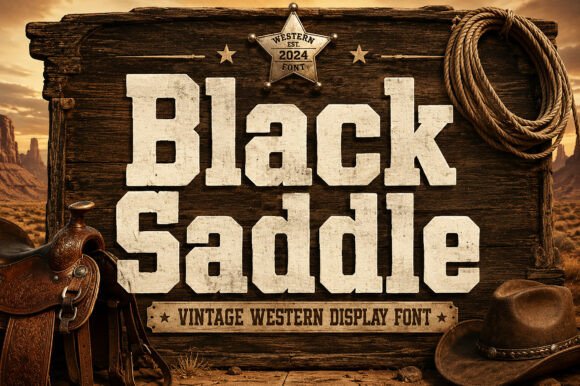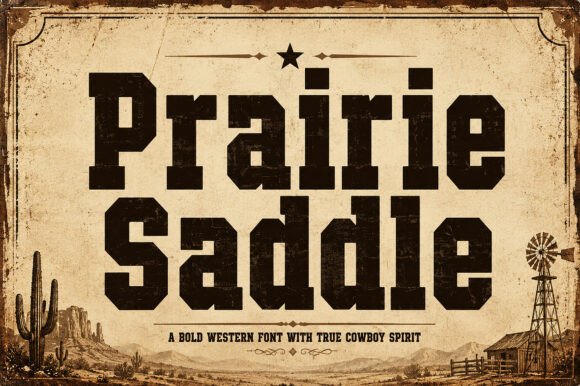
Prairie Saddle Font for Bold Western Branding
Use Cases for Prairie Saddle on E-commerce Platforms
- Hero section headlines for boutique online stores
- Product category titles with a rustic feel
- Call-to-action buttons with high contrast
- Banner text for seasonal promotions
- Logo text for brands rooted in western heritage
How to Use Prairie Saddle in Portfolio Websites
When designing a creative portfolio, consider using Prairie Saddle for main navigation titles or section headings. Its boldness works best with short phrases and impactful statements. For example, using Prairie Saddle in a headline like “Design That Speaks Volumes” can create a lasting impression on visitors.
Best Practices for Using Prairie Saddle on Coaching Sites
- Use Prairie Saddle for headline text in hero sections
- Apply it sparingly to avoid overwhelming the reader
- Ensure sufficient contrast between the font and background colors
- Test its legibility on mobile devices before finalizing designs
- Pair it with a modern sans serif font for body content
Using Prairie Saddle in Social Media Campaigns
Incorporate Prairie Saddle into social media campaigns by using it for post headlines, promotional captions, or branded hashtags. Its bold appearance helps draw attention in a crowded feed. However, always ensure that the font does not overpower other design elements or make the message difficult to read.
Font Pairing Tips for Editorial Web Pages
To maintain readability and balance, pair Prairie Saddle with a simple sans serif font for body copy. This combination allows the display font to serve as a decorative accent without compromising the overall user experience. Always test different combinations across various screen sizes to ensure consistent performance.
Practical Considerations for Commercial Font Licensing
Before implementing Prairie Saddle in commercial projects, ensure that you have the appropriate licensing for websites, client projects, online stores, landing pages, digital templates, and brand assets. Always check the included styles, file formats, webfont availability, alternates, weights, and multilingual support if relevant to your use case.