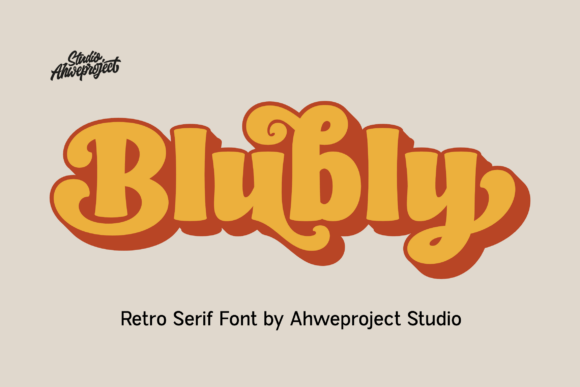
Blubly: A Bold Retro Serif Font for Eye-Catching Branding
Blubly on a Café Logo Concept
Opening a fresh brand board, I reached for Blubly, a bold retro serif font inspired by vintage signage and groovy aesthetics. I was working on a logo concept for a new boutique café, and the first thing that caught my eye was how Blubly instantly brought a sense of nostalgia and charm to the table. The chunky letterforms and playful curves gave the design an old-school vibe that felt both authentic and modern.
I tested it against a few other fonts—some classic serifs and even a couple of minimalist sans serifs—but nothing compared to the visual punch Blubly delivered. It wasn’t just about the look; it was about how the font made me feel. It had that unmistakable energy of a golden era, perfect for a brand aiming to evoke warmth and approachability.
Blubly in Packaging Mockups
Next up, I moved to a packaging mockup for the same café. Blubly shone here too, especially when placed on a coffee bag or a takeaway cup. Its eye-catching style made the product stand out on store shelves, and the retro aesthetic aligned perfectly with the café’s theme of being a cozy, nostalgic hangout spot.
The font's boldness helped create a strong visual hierarchy, ensuring the brand name was immediately noticeable. Even at smaller sizes, Blubly maintained its legibility and impact, which is rare for a display font. This made it ideal for short phrases like "Brewed with Love" or "Handcrafted Coffee."
However, I noticed that using Blubly for long body text on packaging would be problematic. It’s definitely best suited as a display or headline font rather than for extended copy. That said, for short taglines or product names, it’s a winner.
Blubly in Social Media Graphics
When it came time to create social media graphics for the café, Blubly proved to be a versatile choice. I used it on Instagram posts and Facebook banners, and it always drew attention. The playful curves and groovy vibes matched the café’s personality well, making the content feel more engaging and visually appealing.
I paired Blubly with a clean sans serif font for body text, which created a nice contrast and ensured readability. The combination worked well for promotional posts, event announcements, and seasonal campaigns. It added a touch of fun without overwhelming the design.
One thing I learned from testing Blubly in this context was the importance of spacing and color contrast. Using a lighter background or a complementary color helped the font pop while maintaining a balanced look across different platforms.
Blubly for Business Cards and Print Materials
For the business cards, I wanted something that would leave a lasting impression. Blubly fit the bill perfectly. The chunky letterforms gave the cards a tactile, almost physical presence, making them memorable in a stack of generic designs.
On printed materials like flyers and posters, Blubly added a sense of character and uniqueness. It worked especially well for events, local promotions, and community-based projects where a friendly and approachable tone was needed. However, I found that using it in small print or low-resolution prints could lead to some loss of detail, so high-quality printing is essential.
Overall, Blubly is a fantastic choice for display purposes in print. Just be mindful of the context and ensure that it complements the overall design rather than overpowering it.
Blubly in Web Design and Digital Use
Finally, I tested Blubly on the café’s website header and landing page. As a display font, it performed exceptionally well in digital environments. The playful curves and bold style translated beautifully to the screen, adding a dynamic feel to the homepage hero section.
For web use, I made sure to check the font’s availability as a webfont and confirmed that it supported the necessary characters and languages. It loaded quickly and rendered cleanly across different browsers and devices, which is crucial for any online project.
I also experimented with font pairing for the rest of the site, using a modern sans serif for body text and keeping Blubly reserved for headlines and call-to-action buttons. This approach kept the site readable while still allowing Blubly to shine in key areas.
Before finalizing any client work, I recommend testing Blubly in real-world conditions—on screens, in print, and across different sizes and backgrounds. It’s also important to review the commercial font licensing to ensure it meets your needs for brand identity, templates, or digital products.